Claude Fable 5.2 vs GPT-6 Astra: Coding, Cost & Agents

By Emma Reed
MyClaw Editorial
Compare in MyClaw
Compare Claude Fable 5.2 and GPT-6 Astra on your own work
Give both models the same task and compare quality, speed, and cost.
AI Takeaway
- Which is better for difficult coding? Fable 5.2 leads Anthropic's published head-to-head coding comparisons, making it the stronger starting candidate. Your repository results should decide a switch.
- Which has cheaper API rates? Fable lists $8 input/$40 output per million tokens; Astra lists $10/$50. Thinking tokens, caching, tools, and retries determine the actual bill.
- Which handles more context? Astra supports 1.05M tokens versus Fable's 1M, but applies higher rates above 272K input tokens.
- When should you keep Astra? Keep it when your existing OpenAI workflow already finishes reliably and a Fable trial does not improve quality, cost, or review time enough to justify migration.
Claude Fable 5.2 vs GPT-6 Astra at a Glance
Fable 5.2 combines lower published token rates with stronger results in Anthropic's selected launch evaluations. Astra offers a slightly larger context window and continuity for teams already using OpenAI's tools.
These are published API specifications and standard rates checked on November 10, 2026. They are separate from chat subscription prices.
| Detail | Claude Fable 5.2 | GPT-6 Astra |
|---|---|---|
| API model ID | claude-fable-5-2 | gpt-6-astra |
| Input / output per 1M tokens | $8 / $40 | $10 / $50 |
| Cached input per 1M tokens | $0.20 | $1 |
| Context window | 1M tokens | 1.05M tokens |
| Maximum output | 128K tokens | 128K tokens |
| Input → output | Text and images → text | Text and images → text |
| Thinking controls | Adaptive thinking always on; effort adjustable | Reasoning effort adjustable |
Both expose low, medium, high, xhigh, and max effort settings. Those labels do not imply equal compute or cost across providers. The GPT-6 Astra model details also cover hosted-agent availability; check which model features your chosen app exposes.
Coding and Agent Tasks: What the Benchmarks Show

Repository Changes and Long Coding Jobs
Anthropic's November 9 launch comparison reports higher Fable 5.2 scores on two coding evaluations:
| Anthropic-reported evaluation | Fable 5.2 | GPT-6 Astra |
|---|---|---|
| FrontierCode 2.0 | 49.1% at Xhigh | 42.8% |
| FrontierSWE v2 | 69.9% | 65.5% |
The table uses each model's highest available effort unless noted. Anthropic also reports Fable at High scoring 45.3% on FrontierCode, ahead of Astra's 42.8%, at about the same task cost. These are vendor-reported results; this article does not present independent testing.
FrontierCode evaluates whether code changes would be accepted by repository maintainers. That supports trying Fable on difficult changes, while leaving an essential question open: can it meet your project's conventions and tests?
For coding-agent workflows, define success before the run: reproduce the bug, prepare a focused patch, pass the relevant checks, and explain any remaining gaps. Track how often you have to redirect the agent. A patch that passes tests but needs extensive rewriting still carries a review cost.
For example, a migration should preserve required behavior and produce a reviewable diff. Count it as incomplete if the agent weakens a test to get a pass or skips a dependency it was asked to update.
Research and Computer Use
In the same launch comparison, Fable scores 51.4% versus Astra's 41.4% on AutomationBench. On OSWorld 2.1's partial offline set, the reported figures are 89.3% and 79.5%. These results support testing Fable for business automation and computer use; the partial offline evaluation does not establish performance across every desktop task.
In practice, the surrounding software controls which files, websites, and actions the model can reach. Different tools or permissions can change the outcome even with the same model.
For research-agent workflows, assess source quality, accurate evidence extraction, and a finished report. Can another person trace the important claims to their evidence? For computer use, inspect the saved file or final application state against the requested outcome.
Measure time through completion and corrections. The launch scores do not establish a universal speed winner for your browser, research sources, or document workflow.
API Pricing: Compare the Cost of a Finished Task
Standard Rates, Caching, and the 272K Threshold
Fable's standard input and output rates are 20% lower than Astra's. That comparison assumes equal billable token counts and ordinary base pricing. Different tokenizers and reasoning behavior mean identical prompts need not produce identical usage.
Long context creates a larger difference. When Astra's input exceeds 272K tokens, the full request receives higher rates: twice the input and cache rates, and 1.5 times the output rate. Fable's full 1M context uses standard rates under ordinary global pricing.
For an illustrative request with 300K uncached input tokens and 10K total billable output tokens:
- Fable 5.2: $2.40 input + $0.40 output = $2.80.
- GPT-6 Astra: $6.00 input + $0.75 output = $6.75.
This example holds billable token counts constant; it does not predict what either model will consume on the same prompt. Output includes billable reasoning tokens. Tool fees, hosting, premium modes, and regional adjustments are excluded.
Repeated context can benefit from caching. Fable lists $0.20 per million cached input tokens versus Astra's $1 at base rates; Astra's threshold also doubles its cache rates. Cache eligibility, write charges, and cache lifetime affect savings.
Separate the first run from follow-up runs in your records. A large initial document load and a short question against cached material have different cost profiles. Testing only one can misrepresent a workflow that regularly alternates between them.
Tokens, Retries, and Review Time
Add model and tool charges across all attempts, then divide by accepted tasks. Track human review time alongside that figure; if you convert it into money, state the hourly assumption.
A simple hypothetical shows why: two $1.20 attempts cost $2.40 to finish one task, while a single successful $2 attempt costs $2. Lower token rates do not guarantee a lower completed-task bill.
Hosting is another budget line. MyClaw hosting pricing covers the agent's cloud environment; model token usage is billed separately.
Which Model Fits Your Workflow?
The practical choice depends on where better model output would change the result:
- Difficult migrations or extended coding tasks: test Fable 5.2 first when current results require too much intervention. Its published coding results justify a trial.
- An established OpenAI workflow: Astra supports Responses API tools such as web search, file search, hosted shell, and apply patch. If your system already uses them, retaining Astra can avoid integration work. That is a workflow advantage, not proof of higher model quality.
- Large document collections: Fable's standard pricing across its full context window makes it attractive to test for requests above 272K input tokens. Still measure retrieval accuracy; context capacity alone cannot establish answer quality.
Compare each model at settings that fit your budget. Try more than one effort level before deciding: the most expensive setting may add little value to an ordinary task.
Integration details also matter. Fable's adaptive thinking stays on, and its API does not support forced tool choice. Check workflows that rely on those controls before switching. Fable also requires 30-day data retention unless Anthropic expressly authorizes an exception; private hosting does not override the model provider's terms.
For recurring code automation, include both routine jobs and difficult tickets. Keep unsuccessful attempts in the cost calculation. A model that excels at the hardest migration may still be unnecessarily expensive for routine maintenance.
Run Repeatable Agent Tasks with MyClaw
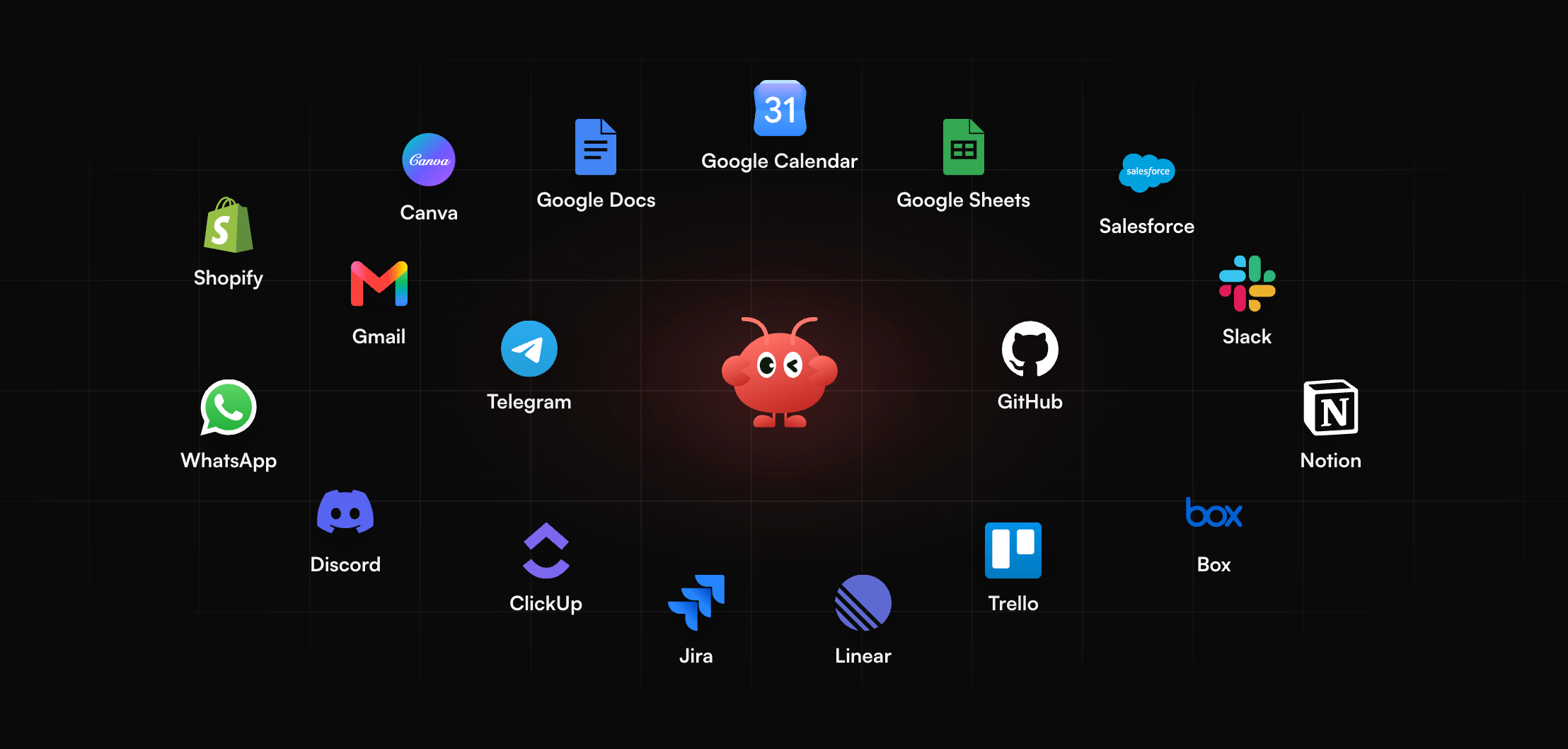
Once you have chosen a model to evaluate, give it a stable place to work. MyClaw provides managed OpenClaw hosting for private, always-on agents, with infrastructure maintenance handled for you. Your project files and working environment remain available for long tasks and follow-up runs.
Step 1: Launch a Workspace Around One Real Job
Launch a hosted OpenClaw workspace and choose one outcome: fix a failing test or deliver a sourced research brief. Add the required project files, configure tools and permissions, and write down the acceptance checks. Keep a clean copy of the inputs for each trial.
Step 2: Check Model Access and Run Controlled Trials
MyClaw lists Astra for hosted agents. Confirm Fable 5.2 in your workspace's available models before using it there. If it is unavailable, evaluate through a supported provider and record the environment difference; do not treat that as a controlled comparison of models alone.
Give each trial the same files, instructions, tools, permissions, and acceptance checks. Set explicit effort, time, and spending limits, and preserve the outputs separately.
Step 3: Keep the Model That Finishes Reliably
Review the patch or report against your checks. Record elapsed time, token and tool charges, retries, and human cleanup. Save the winning configuration alongside its logs, then reuse it for similar jobs. Reassess when the workload changes or a new model version becomes available.
Make the Switch on Evidence
Before changing your default, run one routine job and one job your current model struggles with. Switch when the quality gain or cost reduction outweighs migration work. If neither model passes, first inspect the missing context, tool access, or acceptance criteria before paying for another attempt.
Compare in MyClaw
Compare Claude Fable 5.2 and GPT-6 Astra on your own work
Give both models the same task and compare quality, speed, and cost.