DeepSeek V4.1 Flash vs DeepSeek V4 Pro: Does the New Flash Replace Pro?

By Julian Brooks
MyClaw Editorial
MyClaw
Run Best-in-Class AI Agents Now
Run OpenClaw or Hermes Agent on managed MyClaw hosting, so your AI agent stays online, updated, and ready for real work.
AI Takeaway
- Which one should be your default? For most jobs, start with DeepSeek V4.1 Flash. It lists far lower prices, accepts images and carries DeepSeek-reported agent gains from the October 17, 2026 update. DeepSeek V4 Pro is the larger model, and our own view is that it suits knowledge-heavy or high-stakes text work (we ran no tests).
- What does each cost through the API? Flash (
deepseek-flash) charges $0.30 for every million tokens sent in uncached, and $1.20 for every million generated, in busy hours. Pro (deepseek-v4-pro) is listed at $1.32 and $3.96. Quiet hours cost half for both (vendor-stated, read October 19, 2026). - What can Flash do that Pro cannot? On DeepSeek's pricing page, Flash is marked as accepting images while Pro is marked as not supporting vision. Both share a one-million-token window and a 384K output ceiling, and Flash allows 2,500 concurrent requests against 500 for Pro.
- Is Pro being retired? No. DeepSeek's September 10, 2026 changelog says it will keep serving V4 Pro after September 14 with billing unchanged. Only the old V4 Flash names were retired, and they now route to Flash at Flash prices.
- Can you download either one? DeepSeek's Hugging Face pages list the MIT License for both families (vendor-stated).
DeepSeek V4.1 Flash vs DeepSeek V4 Pro: The Quick Verdict
Here is the simple picture: Flash is the everyday workhorse and Pro as the heavyweight you call in on purpose. In short, Flash wins on price, images and concurrency, and Pro wins on size and knowledge tests. DeepSeek has moved Flash forward twice since Pro's last refresh, so the spring-era gap that many people remember is out of date. Each figure below comes from DeepSeek's own pages and is dated, since nobody here ran a hands-on test.
| DeepSeek V4.1 Flash | DeepSeek V4 Pro | |
|---|---|---|
| API name | deepseek-flash | deepseek-v4-pro |
| Listed version | DeepSeek-V4.1-Flash-1017 | DeepSeek-V4-Pro-0813 |
| Context window | 1M | 1M |
| Output ceiling | 384K | 384K |
| Vision | Supported | Not supported |
| Concurrency limit | 2,500 | 500 |
| Peak input, output | $0.30, $1.20 | $1.32, $3.96 |
| Off-peak input, output | $0.15, $0.60 | $0.66, $1.98 |
Inside DeepSeek V4.1 Flash
V4.1 Flash arrived on September 10, 2026. DeepSeek presents it as the smallest member of a fresh architecture generation, with visual understanding built in from the start. The stated goals are a higher ceiling, faster inference and better throughput. Thinking is the default setting, a non-thinking switch exists, and requests using the retired Flash names end up here.
We leave out a parameter count, because the figures shown across DeepSeek's pages have disagreed and we would rather not guess. To see this model against Meta's, try our Muse Spark 1.3 matchup.
What the 1017 Snapshot Changed
DeepSeek's changelog entry dated October 17, 2026 describes an upgrade to DeepSeek-V4.1-Flash-1017 for the API, website and app. Nothing changes in how you call it or what it costs: the deepseek-flash name now resolves to the newer weights. Hugging Face labels the release a minor update.
Compared with the launch build, DeepSeek reports Terminal-Bench 4.0 climbing from 31.2 to 42.3, plus DeepSWE v1.1 moving up from 74.2 to 77.0, along with briefer, faster task runs. Treat these as vendor-reported results from harnesses DeepSeek picked, and try your own workload before relying on them.
Where DeepSeek V4 Pro Still Wins
The general release of V4 Pro went out on August 13, 2026. The changelog for that day stresses stronger agent skills, native Responses API support and three reasoning effort settings: low, high and max. Through the API it handles text only, which is the clearest functional gap next to Flash.
For size, the preview model card for the V4 family describes Pro as a mixture-of-experts model with 1.6T total and 49B active parameters. That is the preview-card figure, and we did not find a separate figure for the 0813 release. The same card shows Pro leading on knowledge-style tests, such as 57.9 on SimpleQA-Verified at max effort compared with 34.1 for the earlier V4-Flash (vendor-stated). Our Kimi K3 comparison looks at Pro against a rival.

What You Will Actually Pay
DeepSeek charges two rates, and the quiet-hours rate is exactly half. The busy windows run from 01:00 to 04:00 and again from 06:00 to 10:00 UTC on weekdays, with Chinese public holidays excluded. All remaining hours, weekends and those holidays included, get the lower rate (vendor-stated, read October 19, 2026).
In busy hours, each million uncached input tokens cost $0.30 on Flash and $1.32 on Pro, and a million output tokens cost $1.20 and $3.96. Cache hits cost $0.006 and $0.044.
A quick sum of our own: a job feeding in a million uncached tokens and returning 100,000 would list around $0.42 on Flash and $1.72 on Pro during busy hours, so Pro costs about four times more. In quiet hours the pair becomes $0.21 and $0.86. Older write-ups, ours from August included, quote pre-September prices, so open the live page before you budget. Retries and long reasoning can push real bills in either direction, and cache hits can pull them down, so measure a representative job first.
Reading the Benchmark Tables
DeepSeek released these tables on different dates, so no clean head-to-head exists. The August 13 Pro table shows Terminal Bench 2.1 at 87.9, NL2Repo at 61.5, CyberGym at 83.3, plus Agents' Last Exam at 25.7. The September 10 Flash table shows 90.6, 65.4, 88.1 and 31.8 under those four names.
Take that comparison with a pinch of salt. The tables belong to separate releases and setups, and DeepSeek never lines them up itself. A few benchmark names differ between them, so we skipped those. What we can fairly say is that on DeepSeek's own numbers Flash no longer looks like a clearly weaker coding agent, while Pro keeps its edge on knowledge-heavy questions. For a Pro versus a closed rival, see our GPT-5.5 comparison.
DeepSeek V4.1 Flash vs DeepSeek V4 Pro: Strengths and Weaknesses
Pros of V4.1 Flash
- Far lower listed rates, plus a half-price quiet period.
- Accepts images and allows more concurrent requests.
- Newly updated, with agent gains DeepSeek itself reports.
Cons of V4.1 Flash
- A smaller model, so knowledge-heavy questions may suffer.
- Two price tiers make budgets harder to predict.
- Its latest gains are vendor-reported.
Pros of V4 Pro
- A larger model that scores higher on knowledge tests.
- Three effort settings and native Responses API support.
- Still on offer after September 14 at unchanged billing.
Cons of V4 Pro
- About four times Flash's listed cost for the same job.
- No image input through the API.
- A lower limit of 500 concurrent requests.
A Simple Way to Put an Agent to Work: MyClaw
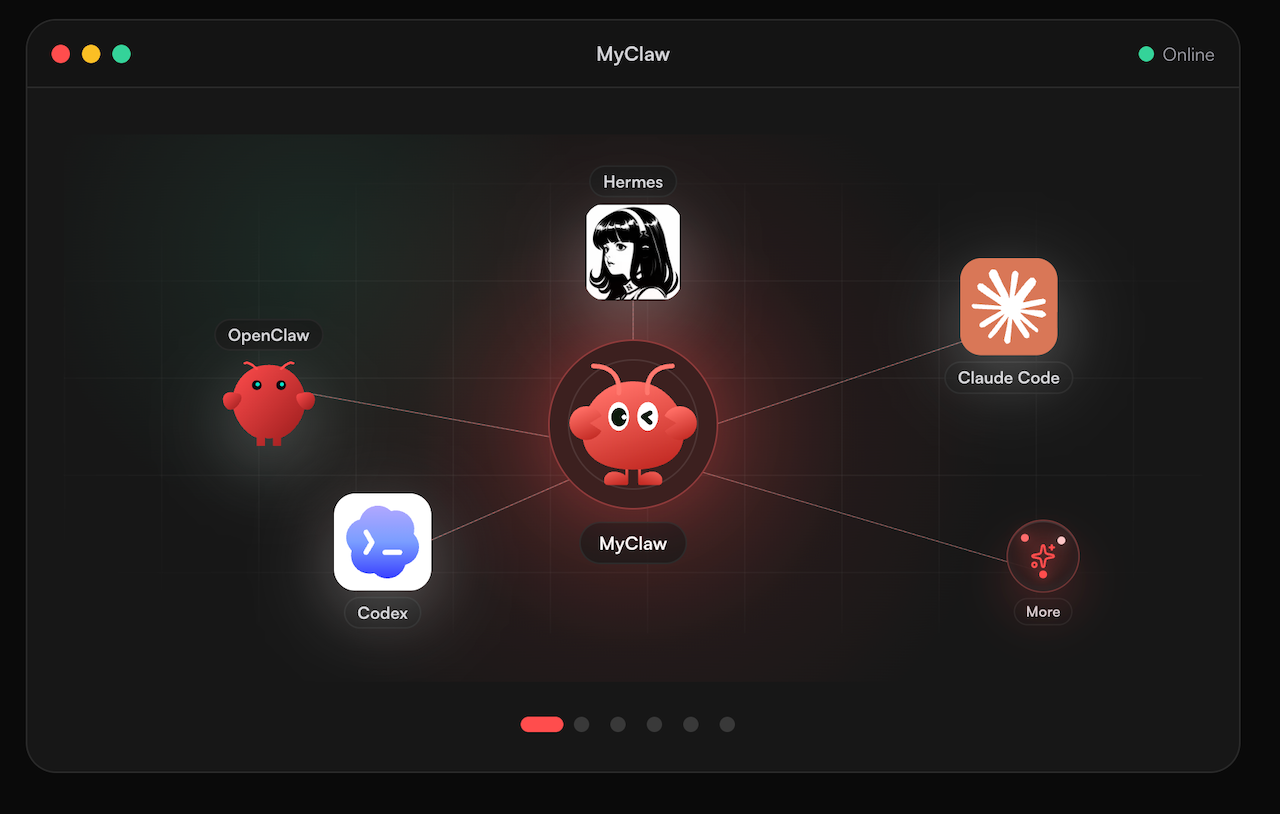
Choosing a model is just one piece, since something has to carry out the work. MyClaw offers a general-purpose agent that lives on managed hosting, running OpenClaw or Hermes under the hood and ready around the clock. Message it from a chat app or open it in a browser, and it can reach whatever material you connect to it.
Most of the popular models work with MyClaw, so no single pick locks you in, and you can change your mind as prices and snapshots shift. We make no claim that DeepSeek models run there. For background first, see what OpenClaw is or the Hermes agent explainer.
- Create an account and start your hosted agent.
- Pair it with a messenger you already use, then point it at the documents and tools it should see.
- Give it one light daily errand and judge the result.
Choosing Between Flash and Pro
Reach for Flash on high-volume jobs, anything with images, agent loops and batches that can wait for quiet hours. Reach for Pro when the work leans on knowledge or a poor answer would be costly, and plain text input is enough. If images matter, the choice is already made, because Pro cannot read them through the API.
Nothing forces a commitment, and you can swap models later. Send three genuine tasks to each, then weigh spend, retries and the hours until you accept the output. Our earlier Flash and Pro comparison covers older snapshots and remains useful context, though its prices have moved on.
Conclusion
V4.1 Flash is now the sensible first stop: lower-priced, image-aware and freshly updated. V4 Pro remains available for heavier knowledge work, and you can use both. Try them on tasks of your own, keep an eye on the busy-hours clock, and let the outcome decide. Prefer not to set everything up yourself? A hosted agent makes an easy place to begin.
Skip the Setup, Run Best-in-Class AI Agents Now
Launch a managed OpenClaw or Hermes Agent workspace in minutes, with always-on hosting, updates, and support handled by MyClaw.