DeepSeek V4.1 Flash vs Gemini 3.8 Flash: Price, Inputs and Agent Benchmarks

By Julian Brooks
MyClaw Editorial
MyClaw
Run Best-in-Class AI Agents Now
Run OpenClaw or Hermes Agent on managed MyClaw hosting, so your AI agent stays online, updated, and ready for real work.
AI Takeaway
- Which model makes the better starting point? That hinges on your files and your budget. DeepSeek V4.1 Flash is the cheaper pick with downloadable weights, whereas Gemini 3.8 Flash reads audio, video and PDFs and sits inside Google's ecosystem. Our own view (untested) is to begin with DeepSeek for text and pictures, and reach for Gemini when other formats show up.
- What will the APIs charge you? Per million tokens,
deepseek-flash(DeepSeek-V4.1-Flash-1017) lists $0.30 for uncached input with $1.20 for output in busy hours, and half that in quiet ones.gemini-3.8-flashlists $0.75 and $3.75 through December 31, 2026, then $1.50 and $7.50 from January 1, 2027 (vendor-stated, as of October 19, 2026). - Which handles more file types? Gemini takes in text, pictures, clips, sound and PDF files, and replies in text. DeepSeek lists text plus pictures. Each offers about a window near one million tokens, but DeepSeek can write up to 384K tokens back and Gemini up to 65,536.
- Which one can you download? DeepSeek released its weights with an MIT license, hosted on Hugging Face (vendor-stated). Gemini 3.8 Flash stays closed, reachable via Google's apps and APIs.
- Does a hosted agent fit in? MyClaw's general agent gets its own section below. Availability of either model there is not claimed.
DeepSeek V4.1 Flash vs Gemini 3.8 Flash: The Quick Verdict
To sum up, DeepSeek is the frugal, open choice, while Gemini is the wider package from a giant platform. We ran no tests, and each figure was taken from a vendor page, with its date.
| DeepSeek V4.1 Flash | Gemini 3.8 Flash | |
|---|---|---|
| Maker | DeepSeek | |
| API name | deepseek-flash | gemini-3.8-flash |
| Listed version | DeepSeek-V4.1-Flash-1017 | Stable, GA September 2, 2026 |
| Window size | 1M | 1,048,576 |
| Reply limit | 384K | 65,536 |
| Accepts | Text and pictures | Text, pictures, video, audio and PDF files |
| Weights | MIT License | Not released |
| Input and output prices | $0.30 and $1.20 (busy hours) | $0.75 and $3.75 (to December 31) |
How DeepSeek V4.1 Flash Stacks Up
DeepSeek debuted the model on September 10, 2026. The company describes it as the smallest model in a newer architecture generation, with image understanding built in. Reasoning is switched on unless you turn it off, and calls to the retired Flash names are now handled here at Flash rates. We leave out a size figure because DeepSeek's own pages have disagreed on it.
Where the 1017 Snapshot Helps
An October 17, 2026 changelog entry announces DeepSeek-V4.1-Flash-1017. Calling it and paying for it work exactly as before, and its Hugging Face page labels it a minor update. DeepSeek claims stronger agent results with shorter, faster runs than the launch build, all measured by the company itself. Our Pro tier comparison looks at the heavier sibling.
How Gemini 3.8 Flash Stacks Up
Google calls this its most intelligent Flash model, pitched at long-horizon engineering, agents and demanding office workflows. The DeepMind model card from September 2, 2026 says it is built on Gemini 3.7 Flash and retains adjustable effort. Thinking can be set to low, medium (the default) or high, and asking for minimal produces an error.
Documentation also lists caching, code execution, function calling, search grounding and a computer-use preview, along with Batch, Flex and Priority consumption. Google cautions that higher effort can burn more tokens, and the card states a March 2026 knowledge cutoff. Because the model card leans on the 3.7 Flash card for safety and training details, the 3.8 page is short. Our Gemini 3.8 Flash review goes deeper on the model alone.
Costs Side by Side, and the 2027 Price Change
On Google's pricing page (read October 19, 2026), a million input tokens run $0.75, while output costs $3.75 per million until December 31, 2026. Both double on January 1, 2027. Cached input is $0.075 for now, Batch and Flex are half price, and a free tier exists. Google adds that free-tier content may help improve its products, while paid usage does not.
DeepSeek prices by the clock instead. Busy time means weekdays at 01:00-04:00 plus 06:00-10:00 UTC, with Chinese public holidays left out, and any other hour is billed at half (vendor-stated). A cache hit costs $0.006 in busy hours.
A back-of-envelope sum of ours: one million uncached tokens in plus 100,000 out lands near $0.42 on DeepSeek in busy hours, $0.21 in quiet hours, and $1.13 on Gemini today, rising to $2.25 after the change. Search grounding on Google's side costs $14 for each 1,000 requests after the first 5,000 free each month. Retries and long reasoning move real bills, so run one representative job before you scale up, and keep an eye on whether Gemini's thinking level is set to medium or high.

Context, Modalities and Reply Size
Both models give you around a million tokens of window. What differs is the reply size: DeepSeek allows as many as 384K output tokens and Gemini stops at 65,536. That difference counts if you want entire codebases or lengthy reports in one answer.
Gemini leads on input. Google's cloud documentation permits up to 3,000 images per prompt and about 45 minutes of video with sound, plus audio files and PDFs. DeepSeek's pricing page marks vision as supported, with no mention of audio or video. For recordings or scanned paperwork, confirm the exact formats first, because a model that cannot read your file type will not help however cheap it is.
What Each Vendor's Benchmark Table Says (and Does Not)
These figures come from two separate charts, and neither company includes the other's model. Google's September 2026 table shows DeepSWE v1.1 at 73.7%, Terminal-bench 2.1 at 89.4%, Terminal-bench 4.0 at 19.1% and HLE-Verified at 54.9%.
DeepSeek's 1017 table shows DeepSWE v1.1 at 77.0, Terminal-Bench 4.0 at 42.3 and HLE without tools at 42.6. DeepSeek says it used a named third-party harness for one test, while Google's harness details live on another page. Since setups differ, read the columns as hints rather than a ruling. An earlier pairing is in our Gemini 3.7 Flash versus DeepSeek V4 Flash piece.
DeepSeek V4.1 Flash vs Gemini 3.8 Flash: Strengths and Weaknesses
Pros: DeepSeek V4.1 Flash
- Lower sticker prices and a half-price off-peak window.
- Weights you can download, licensed MIT.
- A far bigger output ceiling.
Cons: DeepSeek V4.1 Flash
- Audio and video input are not listed.
- Two price tiers complicate budgets.
- Its newest gains are self-reported.
Pros: Gemini 3.8 Flash
- Reads audio, video and PDF files besides pictures.
- Rich tooling, from search grounding to caching.
- Reachable through the Gemini app and Google's cloud platform.
Cons: Gemini 3.8 Flash
- Higher sticker prices that double in 2027.
- No downloadable weights.
- Replies stop at 65,536 tokens.
A Hosted Helper You Can Message Anytime: MyClaw
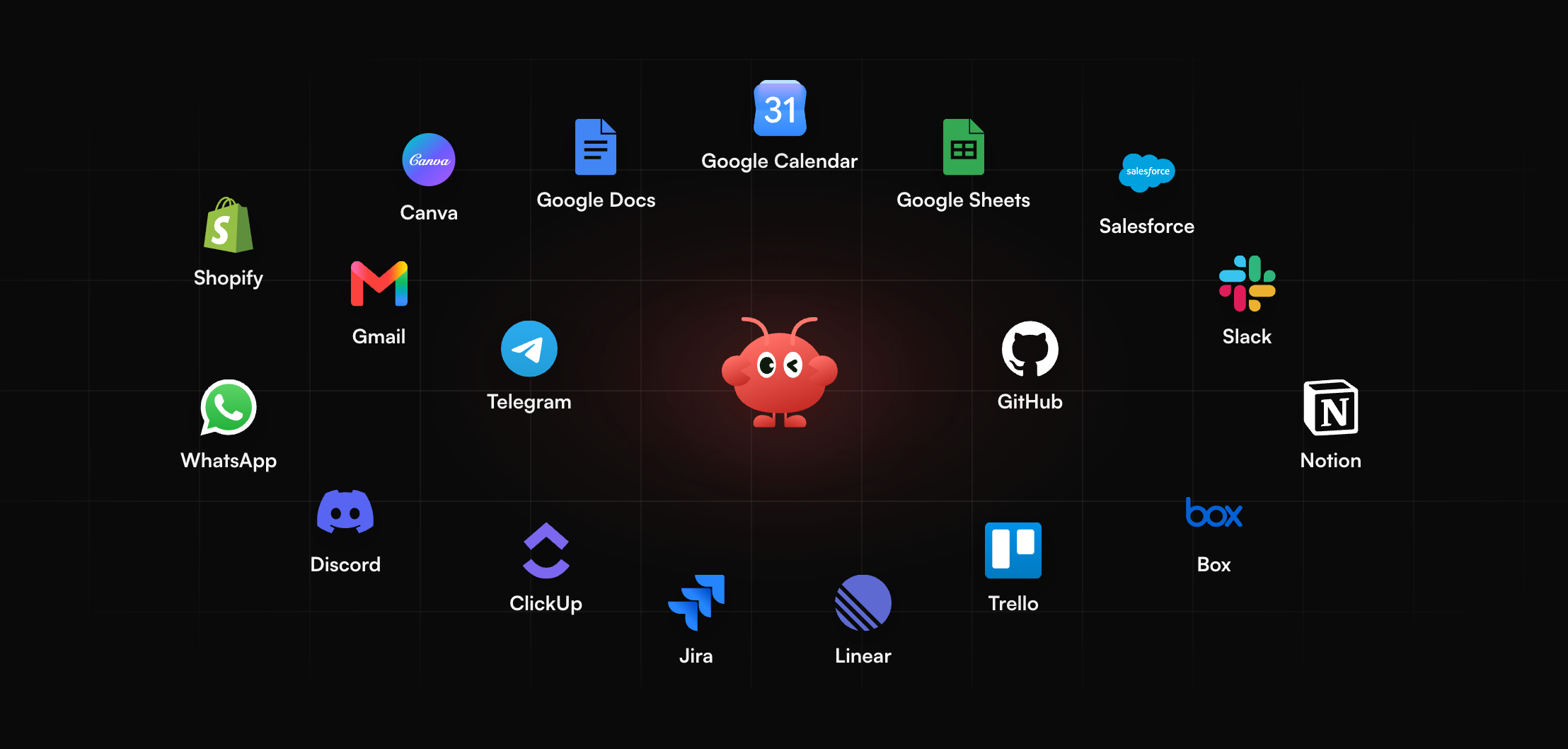
Picking a model is the easy bit, and the work itself still needs a doer. MyClaw hosts a general-purpose agent on your behalf, powered by OpenClaw or Hermes and switched on all day. Talk to it in a messaging app or inside a browser tab, and point it at whichever files, apps and information you want it to use.
MyClaw works with the majority of well-known models, so no single choice traps you. We say nothing of DeepSeek V4.1 Flash or Gemini 3.8 Flash running there. To get oriented, read about OpenClaw or the Hermes agent.
- Register and spin up a hosted agent.
- Link a messenger you already enjoy, and hand over the documents and tools within its reach.
- Try it on a single small daily chore and see how it copes.
Which One to Pick for Your Work
Lean on DeepSeek V4.1 Flash for heavy text and picture workloads, jobs that can be postponed to quiet hours, and anything where open weights count. Lean on Gemini 3.8 Flash when audio, video or PDFs enter the picture, or when you want Google's cloud around the model.
Neither choice is permanent, so relax: switching later costs little. Feed three genuine tasks to both, then compare spend, retries and the time it takes to reach an answer you would keep. The same DeepSeek model meets another rival in our Kimi K3 matchup.
Conclusion
In the end, these two Flash models serve different needs: DeepSeek on price and openness, Gemini on formats and surrounding tools. Since neither vendor charts the other, your own tasks make the fairest test. Recheck prices before budgeting, Gemini's especially, as they change on January 1. Treat our verdict as a first step instead of a ruling. Prefer to skip the plumbing? A hosted agent is a gentle way to begin.
Skip the Setup, Run Best-in-Class AI Agents Now
Launch a managed OpenClaw or Hermes Agent workspace in minutes, with always-on hosting, updates, and support handled by MyClaw.