GPT-6.1 Terra vs 6.1 Sol: Which Effort Setting to Pick

By Olivia Hart
MyClaw Editorial
Compare in MyClaw
Compare GPT-6.1 Terra and GPT-6.1 Sol on your own work
Give both models the same task and compare quality, speed, and cost.
AI Takeaway
- Terra or Sol: which wins? Sol on hard tasks: Index 52 against 48 at max, and 54 against 48 on coding (Artificial Analysis data, Oct 27, 2026).
- Which gives more score per dollar? Terra at low or medium. Sol medium ties Terra max at $0.21, not $0.40 (Artificial Analysis data, Oct 27, 2026).
- Which answers sooner? Terra at low or medium: 1.4s to first token. Sol: 2.7 to 4.4s (Artificial Analysis data, Oct 27, 2026).
- How big is the price gap? Terra charges $1 in and $5 out per million tokens. Sol charges double that (OpenAI pricing docs, Oct 27, 2026).
- Can I try Sol on my own recurring jobs? Yes. MyClaw runs GPT-6.1 Sol on an always-on agent, so you can compare it with your current model on a schedule.
GPT-6.1 Terra vs 6.1 Sol: Specs and Price Gap
Sol launched September 29, 2026. Terra followed on October 26. All specs below are vendor-stated, from OpenAI's docs and launch posts, checked October 27, 2026.
What matches:
- a 1.05M context window, with 922K input and 128K output limits
- image and text in, text out
- prompts over 272K tokens: input doubles and output rises 1.5x for the whole request
- Batch and Flex at 50% off, Fast mode at 2x
What differs:
- Price per 1M tokens: Terra $1 in, $5 out. Sol $2 in, $10 out.
- Prompt caching: Terra $0.05 read and $1.25 write. Sol $0.10 and $2.50.
- Knowledge cutoff: Terra June 1, 2026. Sol April 30, 2026.
- Effort settings: Terra has six, including a none setting. Sol has five, from low to max. Both default to medium.
- Extra speed tier: Sol offers Ultrafast at 6x Standard.
Our arithmetic, Standard rates: a 10K-token reply costs $0.05 on Terra and $0.10 on Sol. For a single-model view, read the GPT-6.1 Terra review or the GPT-6.1 Sol overview.

GPT-6.1 Terra vs 6.1 Sol Benchmarks at Every Effort Level
Artificial Analysis tests each effort setting as its own entry, so a fair side-by-side is possible. Each cell shows Intelligence Index, cost per task and time to first token.
Independent (Artificial Analysis data, via OpenAI's API, Oct 27, 2026):
| Effort | Terra: Index / cost per task / first token | Sol: Index / cost per task / first token |
|---|---|---|
| Low | 36 / $0.05 / 1.29s | 42 / $0.13 / 2.67s |
| Medium | 41 / $0.10 / 1.43s | 48 / $0.21 / 4.36s |
| High | 44 / $0.13 / 6.78s | 50 / $0.32 / 69.02s |
| Xhigh | 45 / $0.19 / 17.50s | 51 / $0.39 / 161.87s |
| Max | 48 / $0.40 / 131.81s | 52 / $0.72 / 284.31s |
Read the table with two limits in mind. Cost per task averages the Index's benchmark tasks, not your workload. First-token times come from the same benchmark workload.
Our arithmetic on the Index gap: Sol leads by 6 points at low, 7 at medium, 6 at high and xhigh, and 4 at max.
Three pairs stand out (our arithmetic):
- Sol medium equals Terra max. Both score 48. Sol medium costs about 48% less per task and answers about 30 times sooner.
- Sol low against Terra high. Both cost $0.13. Terra scores 44 and Sol scores 42.
- Sol xhigh against Sol max. 51 against 52, at $0.39 against $0.72. That is about 46% less.
On coding, the Coding Agent Index v2.0 at max effort puts Sol at 54 and Terra at 48 (Artificial Analysis data, Oct 26, 2026). OpenAI says Sol comes close to its top model, Astra, on agent-driven coding. That is a vendor claim from the Sep 29, 2026 launch, and we did not verify it. For the coding detail, see Sol's coding results.
GPT-6.1 Terra vs 6.1 Sol Speed: Output Rate and First Token
Two numbers matter: how fast text streams, and how long you wait for the first word.
Independent (Artificial Analysis data, Oct 27, 2026):
- Terra output rate: 90.9 to 91.0 tokens per second at every effort.
- Sol output rate: 50.8 at low, 53.5 at medium, 58.1 at high, 64.3 at xhigh, 69.4 at max.
- First token: it climbs with effort on both models. Terra goes from 1.29s to 131.81s. Sol goes from 2.67s to 284.31s. A wait of two minutes or more rules out interactive use.
Third-party (OpenRouter, OpenAI endpoints, Oct 27, 2026): both models show a median near 53 tokens per second. Median latency is 2.12s for Terra and 5.13s for Sol. These come from live routing at default effort, not the benchmark workload. That is why they sit far below the high-effort first-token times above.
So the output-rate gap shrinks in live use. The first-token gap at high effort does not. Sol Fast shows 1.33s latency and costs $4 in, $20 out. Sol Ultrafast reaches 107 tokens per second and costs $12 in, $60 out (OpenRouter, Oct 27, 2026).
OpenAI says Terra completes tasks more than 3x quicker than Sol (OpenAI claim, Oct 26, 2026). Treat that as a claim until you time your own jobs.
GPT-6.1 Terra vs 6.1 Sol Cost per Task: Where Half Price Stops Mattering
Terra's token rate is half of Sol's. Its cost per task is not always half that of Sol.
Independent (Artificial Analysis token counts per Intelligence Index run, Oct 27, 2026):
- Terra: 7.9M low, 14M medium, 23M high, 41M xhigh, 130M max.
- Sol: 9.0M low, 15M medium, 25M high, 36M xhigh, 67M max.
Our arithmetic: Terra's per-task saving at the same effort is 62% at low, 52% at medium, 59% at high, 51% at xhigh and 44% at max.
From low through high, both models spend similar token counts, so Terra's half rate shows up. At max, Terra spends nearly twice Sol's tokens, so its saving falls below the 50% rate gap.
The bigger point is Sol medium. It matches Terra max at roughly half the cost. Terra's edge holds at low and medium, which Artificial Analysis calls Pareto-optimal for cost. Terra max does not earn its price.
If Sol is not enough, Astra is the next step up. Sol against Astra shows that gap.
GPT-6.1 Terra vs 6.1 Sol: How to Choose and Route
These are our recommendations, based on the data above.
- Terra none, low or medium: bulk work, replies a person is waiting for, and screenshot, form or desktop tasks. OpenAI names these as Terra's strengths. The none setting skips reasoning entirely and exists only on Terra.
- Sol medium: your default when quality matters. It matches Terra max with a short wait.
- Sol high or xhigh: the toughest code work and extended agent sessions.
- Max on either model: offline batch jobs only. First tokens take 132 to 284 seconds.
Our routing pattern:
- Send the first pass to Terra at medium effort.
- Check the output with your own eval.
- Escalate failures to Sol at medium. Keep Sol at high or above for what is left.
For example, ticket triage fits Terra low. A code review fits Sol medium. An overnight refactor fits Sol xhigh.
Need a smaller tier? See Sol against Luna. Weighing outside options? Sol and Opus 5.5 compared covers that.
Run GPT-6.1 Sol on a MyClaw Agent
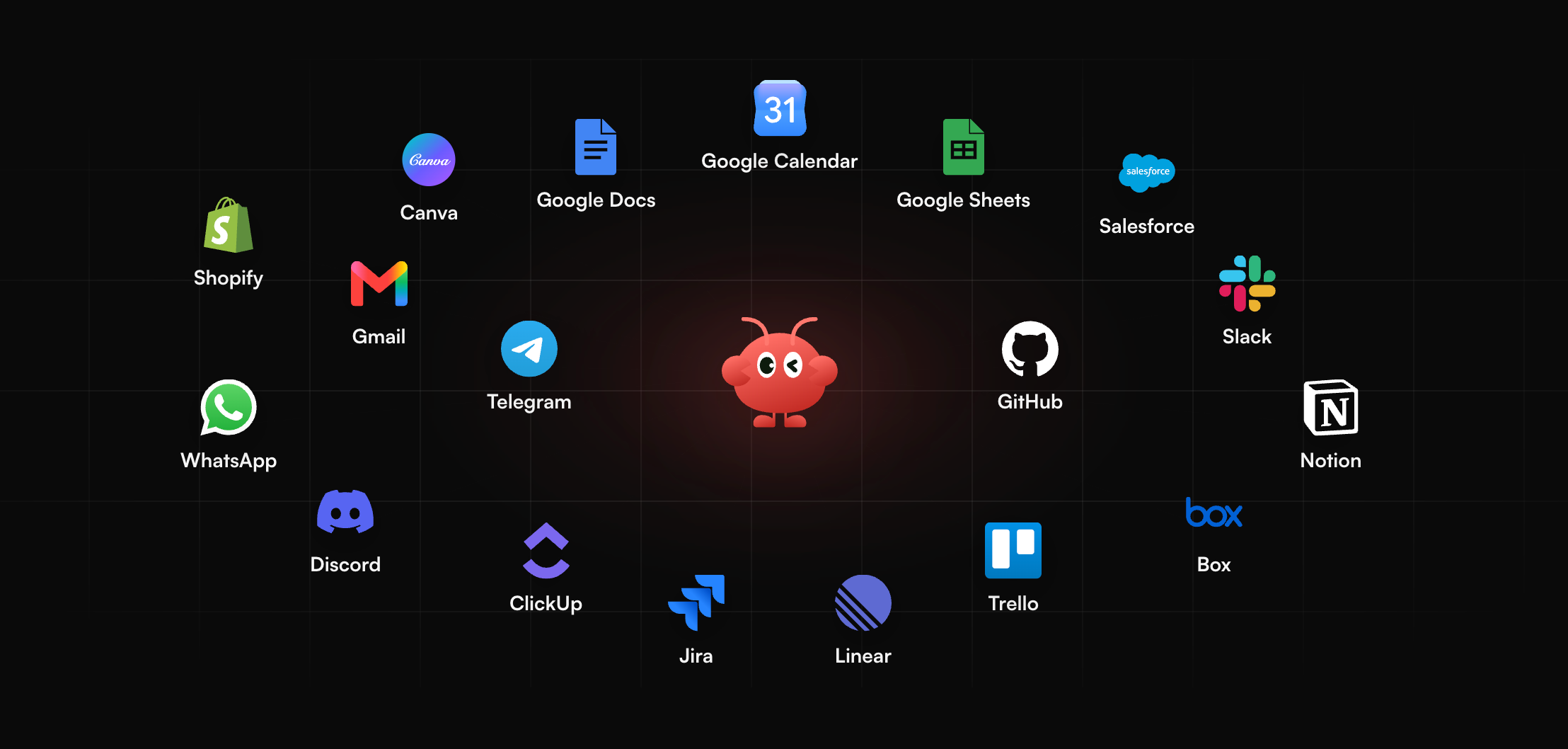
Routing rules stay a guess until your own tasks confirm them. Benchmarks give an average, and your jobs are specific. MyClaw is a managed home for OpenClaw and Hermes agents. Yours stays up all day and night, launching scheduled jobs itself. There are no servers to set up or patch. Switching models stays easy because the whole stack works with most popular models. GPT-6.1 Sol is one you can run on MyClaw today.
- Pick a recurring task. A weekly report, an invoice check or a code review fits well.
- Run GPT-6.1 Sol at medium effort next to your current model. Use the same prompt for both.
- Review the results on a schedule. Track accepted answers, retries and waiting time.
After a few cycles, you will know which effort setting earns its place on your work.
Verdict: GPT-6.1 Terra vs 6.1 Sol by Job
Choose by job, not by name.
- Terra at low or medium: volume and speed.
- Sol at medium: the quality default.
- Sol at high or above: the hardest work.
- Max: skip it for anything interactive.
Both models are strong, so your own test is the one that counts. Set the pass rate you need first. Then take the least expensive model and effort setting that reaches it.
Compare in MyClaw
Compare GPT-6.1 Terra and GPT-6.1 Sol on your own work
Give both models the same task and compare quality, speed, and cost.