
Muse Wonder: Meta Frontier Model Pricing, Benchmarks & Access

By Alex Morgan
MyClaw Editorial
MyClaw
Run Best-in-Class AI Agents Now
Run OpenClaw or Hermes Agent on managed MyClaw hosting, so your AI agent stays online, updated, and ready for real work.
AI Takeaway
- Should you use Muse Wonder? Try it if you build long-running agents or coding workflows and want a 1M-token context model that, in one independent cost test, came in cheaper per task than Anthropic's top models, but wait if you need a stable, non-preview model with proven regional access.
- What is Muse Wonder AI? It is Meta's first frontier model, released Oct 12, 2026 by Meta Superintelligence Labs, built for personal and professional agent work with what Meta calls Active Memory and Active Focus.
- How much does Muse Wonder cost? Per Meta's pricing on Oct 13, 2026, the API costs $4 per million input tokens, $0.20 cached and $20 output, while Muse Wonder Full is only sold inside Muse Code plans from $50 a month.
- How good are Muse Wonder benchmarks? Meta's own tables show it trading wins with Claude Opus 5.5 and leading its internal MemoryBench, while Artificial Analysis, an independent tester, scores it 52 on its Intelligence Index versus 56 for Wonder Full and 58 for Opus 5.5.
- Is Muse Wonder Full the same as Muse Wonder on max effort? No, Meta treats Full as a separate, more capable model that you can reach only through Muse Code, not through the pay-as-you-go API.
Muse Wonder at a Glance
| Spec | Muse Wonder |
|---|---|
| Maker | Meta Superintelligence Labs |
| Released | Oct 12, 2026 (preview) |
| Variants | muse-wonder-1.0 on the API; Wonder Full in Muse Code only |
| Context | Roughly 1.05M tokens |
| Inputs | Text, images, video, audio (PDFs via file upload) |
| Output | Text |
| Effort levels | Six settings, from minimal up to max |
| Tools | Function calling, JSON-schema outputs, built-in web search |
| Weights | Closed |
Meta trained both models at its gigawatt-scale Prometheus data center. It is Meta's first model priced against the top tier from OpenAI and Anthropic.
What Muse Wonder AI Actually Is

Muse Wonder vs Muse Wonder Full
The family has two members. Muse Wonder is the one developers can call directly. Muse Wonder Full is a larger, more capable variant that Meta keeps inside its own Muse Code tool. Meta's documentation stresses that Full is not simply Wonder at maximum reasoning effort; it is a distinct model, which is why it scores higher on most of Meta's charts.
Active Memory and Active Focus
Meta frames the release around two behaviors. Active Memory means carrying important context about a person across conversations and pulling up the right detail when a task needs it. Active Focus means sticking with a hard goal: trying another approach when one fails, asking for clarification, and checking in before an important action. Meta's demos include planning a run in a browser and building a wedding seating chart from messy constraints.
Where You Can Use It Today
Three surfaces matter:
- Meta Model API. Pay-as-you-go access at
api.meta.ai/v1with a bearer token. Requests use the same format as Muse Spark, so switching is mostly a change of model ID. - Muse Code. Meta's terminal coding agent, which can run Wonder on any plan and Wonder Full on the top two.
- Muse app. Meta says Wonder will power experiences there soon, starting with subscribers, but gave no date.
If you are new to the consumer side, our guide to the Muse app covers what it does today.
Muse Wonder Pricing: API Tokens and Muse Code Plans
API rates below come from Meta's Model API pricing, checked Oct 13, 2026.
| Item | Price (Meta) |
|---|---|
| Input | $4.00 per 1M tokens |
| Cached input | $0.20 per 1M tokens |
| Output | $20.00 per 1M tokens |
| Built-in web search | $2.50 per 1,000 searches |
Wonder runs only in Standard mode, where Meta says your content is not used for training. The cheaper Contributor mode offered for Muse Spark does not apply. Third-party write-ups citing Meta list throughput caps of 3,000 requests and 4 million tokens a minute.
Muse Code subscriptions, as listed on Meta's product page and reported by kingy.ai:
| Plan | Monthly price | Wonder | Wonder Full |
|---|---|---|---|
| Everyday Usage | $5 | Yes | No |
| High Usage | $15 | Yes | No |
| Power Usage | $50 | Yes | Yes |
| Maximum Usage | $200 | Yes | Yes |
Two catches. The subscription key works only inside the Muse Code CLI, so it is not cheap general API access. And subscriptions default to Contributor mode, which lets Meta train on your prompts and code unless you opt out in settings.
Cost per Task Runs Higher Than the Sticker
Per token, Wonder matches Claude Opus 5.5 and costs well under GPT-6 Astra. In practice it reads a lot. Artificial Analysis measured about 7.7 million input tokens per index task at max effort, which put Wonder at roughly $4.52 per task. On the same third-party measurement, Opus 5.5 came in near $5.98, GPT-6 Astra near $3.26 and Muse Spark 1.3 near $1.60. Treat those as one lab's numbers on one harness, not a universal bill.

Muse Wonder Benchmarks: Meta's Numbers vs Independent Tests
What Meta Reports
These scores come from Meta's model card and were run by Meta:
| Benchmark | Muse Wonder |
|---|---|
| DeepSWE (pass@1) | 78.8 |
| OSWorld, partial / full completion | 72.6 / 34.3 |
| Terminal-Bench | 52.0 |
| SWE-Marathon | 53.1 |
| Finance Agent | 56.6 |
| HealthBench Professional | 60.5 |
| MemoryBench (Meta-internal) | 85.6 |
Meta says Wonder beats Opus, GPT-6 Astra and Fable on MemoryBench, a memory test Meta built itself, so weigh that lead accordingly. One independent tally of Meta's 14-row table counts six top scores for Wonder Full, six for Opus 5.5 and one for Wonder, so neither family pulls clear.
What Third Parties Found
Artificial Analysis is the main independent source so far. Its Intelligence Index (v4.3, max effort) puts Wonder at 52 and Wonder Full at 56, up from 48 for Muse Spark 1.3 but behind Opus 5.5 at 58. On its Terminal-Bench 4.0 run, Wonder jumped from Spark's 33% to 52%. The same lab measured a 27% hallucination rate for Wonder, among the lower figures it has recorded, while general knowledge remains a relative weakness. Design Arena, via OpenRouter's listing, shows a website-building Elo of 1352 for Wonder at max effort. With barely a day of public access, expect these numbers to move. Meta's own card warns that results vary with prompts, tools and the agent harness.
Muse Wonder vs Muse Spark 1.3: When to Upgrade
Spark 1.3 lists at $1.25 input and $4.25 output per million tokens on Meta's API, so Wonder costs about 3.2 times as much on input and 4.7 times on output. Spark also keeps the discounted Contributor mode. Because both take identical requests, you can A/B them by changing one string.
Use Wonder for long, multi-step jobs where a failed run costs more than the tokens: repository-wide refactors, research that spans many files, or agents that must remember earlier sessions. Keep Spark for high-volume, short tasks. Our Muse Spark 1.3 breakdown and the earlier Muse Spark review cover the cheaper model in depth.
Access, Data Use and Known Limits
- Preview status. Meta labels Wonder a preview, so behavior and limits can change without a version bump.
- Country access. Meta says availability varies by country and shows what you can use during onboarding; it does not publish a simple supported list.
- Age. Meta restricts use to adults, 18 and up.
- Weak spots. The model card flags 3D and spatial reasoning as a known limitation and notes errors in novel multi-step tasks.
- Safety report. Meta calls Wonder its most aligned model yet, with stronger CBRN and cyber safeguards, but the full evaluation report is still to come.
Muse Wonder Verdict: Who Should Switch
Pros:
- Huge context window with strong recall claims
- Same per-token price as Opus 5.5 with a lower measured cost per task
- Easy swap for existing Muse Spark integrations
- Standard-mode API data is not used for training
Cons:
- Still a preview with unclear country access
- Best variant locked inside Muse Code
- Heavy input use makes real bills hard to predict
- Independent testing so far comes from very few sources
Switch if you already run Muse Spark agents and keep hitting their ceiling on long tasks. Hold off if your workload is short and cheap, or if Opus 5.5 already works for you. For other ways to run personal agents, see our Muse alternatives, and for picking a model behind an open-source agent, read our OpenClaw model guide.
Run a Model-Flexible Agent in Your Chat App with MyClaw
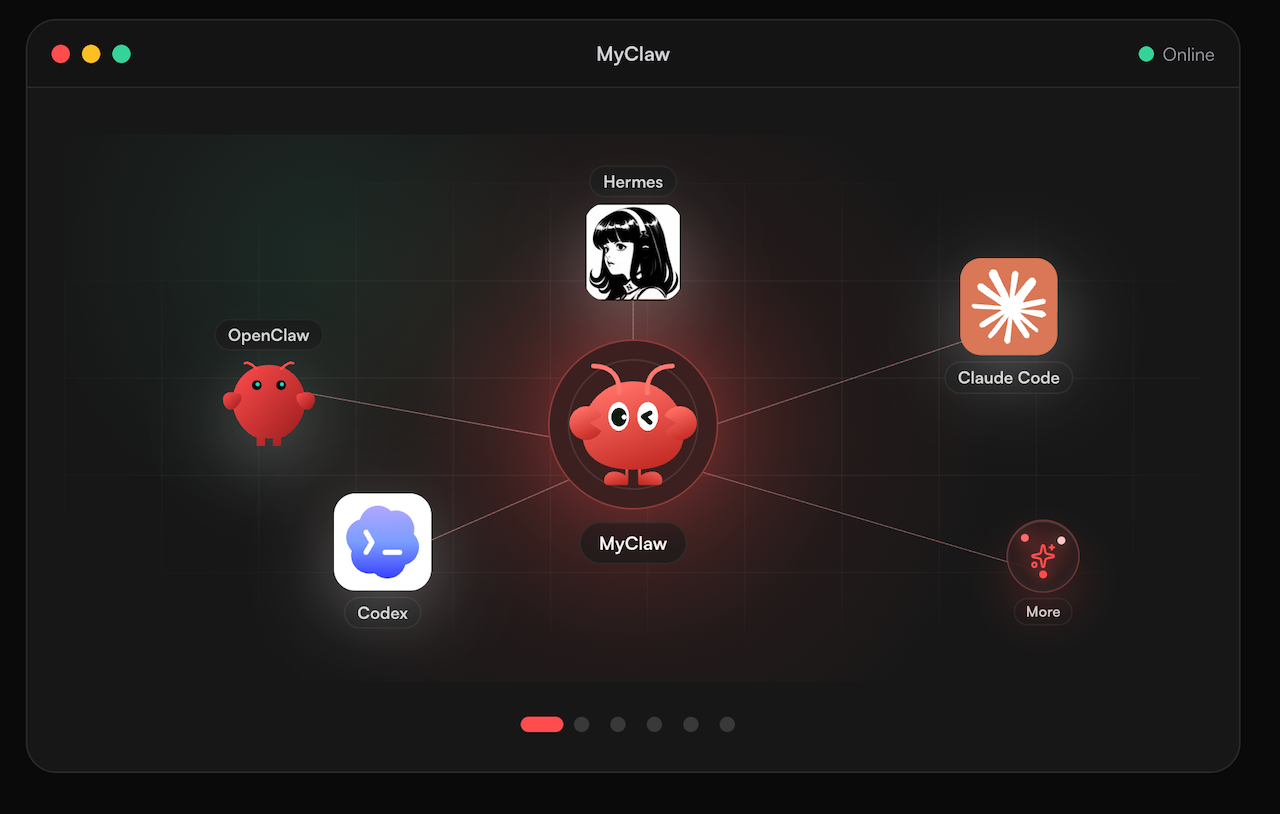
A strong model is only half of a working agent. The other half is a host that keeps it online, holds its memory and lets you reach it from your phone. With MyClaw, your OpenClaw or Hermes Agent setup stays live day and night with no server for you to maintain. Our MyClaw and OpenClaw comparison shows what that saves over self-hosting.
- Open a MyClaw workspace running your choice of OpenClaw or Hermes Agent.
- Select a model from the supported list, connect your chat app so replies reach you there, and switch on just the integrations that job uses.
- Assign one long, multi-step task you would normally babysit, and review its log and output after a week.
Skip the Setup, Run Best-in-Class AI Agents Now
Launch a managed OpenClaw or Hermes Agent workspace in minutes, with always-on hosting, updates, and support handled by MyClaw.