Sales Team Management Tips: Cadence, Coaching, and Large-Team Scale

By Nathan Cole
MyClaw Editorial
MyClaw
Run Best-in-Class AI Agents Now
Run OpenClaw or Hermes Agent on managed MyClaw hosting, so your AI agent stays online, updated, and ready for real work.
AI Takeaway
- What are the highest-leverage sales team management tips? Write results, activity, and process expectations; run a weekly cadence you can keep; and coach one behavior at a time on real calls—not on CRM slides alone.
- What separates tips to manage a successful sales team from heroics? Protected 1:1s, wins tied to specific behaviors, and forecast questions that require a dated next step and decision-maker access (Salesforce State of Sales, 6th edition, survey March 8–April 18, 2024).
- How do you manage large sales teams without burning managers out? Cap span by coaching minutes, share one playbook and stage rules, use pods or peer review when headcount outruns first-line time, and automate hygiene so 1:1s stay about skill (Alexander Group FLSM average about 8.5 direct reports; about 16% of time coaching versus about 28% best practice—firm page metadata updated 2024).
- Which metrics should managers watch weekly? Quota attainment trend, stage conversion, pipeline quality, forecast accuracy, and stale-deal age—not a crowded dashboard.
- Where does MyClaw fit? MyClaw hosts always-on OpenClaw/Hermes agents for pipeline hygiene digests, forecast prep packs, and CRM cleanup on the models you already use.
Set Clear Expectations Before You Add Headcount
Useful sales team management tips start with three lists every rep can recite. Results: the quota and the pipeline coverage needed to hit it. Activity: meetings, opportunities, and follow-ups expected each week. Process: stage names, exit criteria, and a dated next step on every live deal. If a rep cannot name those three, you do not have an expectation yet—only a number on a slide.
Aim people at work they control today. Quotas matter, but the day is made of calls booked, demos run, and next meetings locked. That is how tips to manage a successful sales team stay usable when the month feels heavy. In HubSpot’s 2025 State of Sales (blog update September 9, 2025; about 1,000 sales pros), 30% of sales leaders listed supporting reps as a primary goal. Put coaching hours on the calendar first—not after the forecast call.

Run a Weekly Cadence Managers Can Keep
A cadence you drop by week three is worse than a shorter one you keep. Use this rhythm; shift the days if needed, but keep the pattern.
| When | Meeting | Purpose | Time box |
|---|---|---|---|
| Monday | Team pipeline review | Deals that move this week and what each needs | About 45 min |
| Tuesday–Thursday | One-on-ones | One coached behavior per rep, from a real call | About 30 min each |
| Mid-week | Deal review | Two or three largest or stuck deals, evidence first | About 45 min |
| Late week | Forecast | Commit, best case, and what changed since last week | About 30 min |
| Friday | Coaching check | Did each rep run last week’s coached behavior on a new call? | One to two hours total |
Friday’s coaching check is usually the first meeting teams cancel, and it shows whether the 1:1s worked. Salesforce’s State of Sales, 6th edition (survey March 8–April 18, 2024; 5,500 sales professionals), found only 32% of teams regularly hold manager one-on-ones. Guard those blocks before you add another all-hands.
Coach One Behavior at a Time
Keep coaching narrow. Listen to the call or the approved transcript—not the rep’s retelling. Pick the one moment that mattered: the skipped question or the commitment never asked. Give the exact words for next time, write it down, then check the next call.
Deal reviews should stick to evidence. What did the buyer agree to last time? Is the next meeting on their calendar? Have you spoken to the person who signs? What has to be true for this to close this quarter? A deal with no dated next step and no path to the decision maker is not a forecast line—move it back a stage.
HubSpot’s 2025 State of Sales reported about 59.9% of teams on track to meet or surpass revenue targets. Treat that as an outcome snapshot, not permission to skip skill work. When someone wins, name the winning behavior—not only who closed—so the team can copy it.

How to Manage Large Sales Teams: Tips and Strategies
How to manage large sales teams is mostly a time problem. Tips and strategies that scale start with span math. Alexander Group’s first-line sales manager (FLSM) benchmark puts the average span near 8.5 direct reports, with a range from 2 to 38 (firm page; metadata first published 2013, updated 2024). The same source measures managers coaching about 16% of their week and cites about 28% as best practice. In a forty-hour week, 16% is roughly 384 coaching minutes across the team. At eight reps that is about forty-eight minutes each—enough for a thirty-minute 1:1 plus a short call review most weeks. At twelve reps you are near thirty-two minutes each: the 1:1 alone.
When headcount outruns minutes, standardize before you add hours. One methodology, one competency rubric, and one set of CRM stage rules keep regions aligned. Split into pods with team leads, or run peer call review, so every rep still gets feedback when the first-line calendar is full. Player-coaches who also carry personal quota belong at the low end of the span—selling time comes out of coaching time.
Automate lead routing, stale-deal alerts, and reporting packs rebuilt from exports. For tool patterns around that stack, see Best AI Tools to Automate Sales Workflow. Large teams also lose deals at the handoff into renewals and expansions; keep that surface explicit with Best AI Customer Support Agent for SaaS. HubSpot’s 2025 report found 45% of leaders expect their teams to expand this year—build the system before the next hiring wave. If you need how to manage large sales teams tips strategies in one line: fix span, share rules, then automate.
Align Pipeline, Forecast, and Ops Definitions
Shared definitions stop three dashboards from telling three stories. Agree what “qualified,” “closed-won,” and “commit” mean across marketing, sales, and customer success, then enforce those fields in the CRM. Ownership of the sales execution engine versus the cross-GTM layer is covered in Revenue Operations vs Sales Operations. When inbound quality and handoff rules drift, use the patterns in AI Agents for Marketing.
Forecast calls should challenge the sheet. If the only change since last week is hope, the deal did not move.
Automate the Admin So Managers Can Coach
Org charts do not clean CRM fields. Stale opportunities, blank next steps, mismatched owners, and forecast packs rebuilt from spreadsheets eat coaching hours. Always-on agents can flag deals with no activity past your SLA, draft a Monday forecast digest, and queue incomplete records for human review before the board freezes.
Map those jobs with OpenClaw Getting Started, and compare managed Hermes-style hosting in Best Hermes Agent Hosting. Keep people on definitions and exceptions; let the schedule carry the reminders. Salesforce’s 6th edition found 76% of reps say enablement prepares them to make quota—treat clean data and steady coaching as part of that enablement. The same survey reported 67% of reps did not expect to meet quota that year; more guessing will not fix the number.
Run Always-On Agents With MyClaw
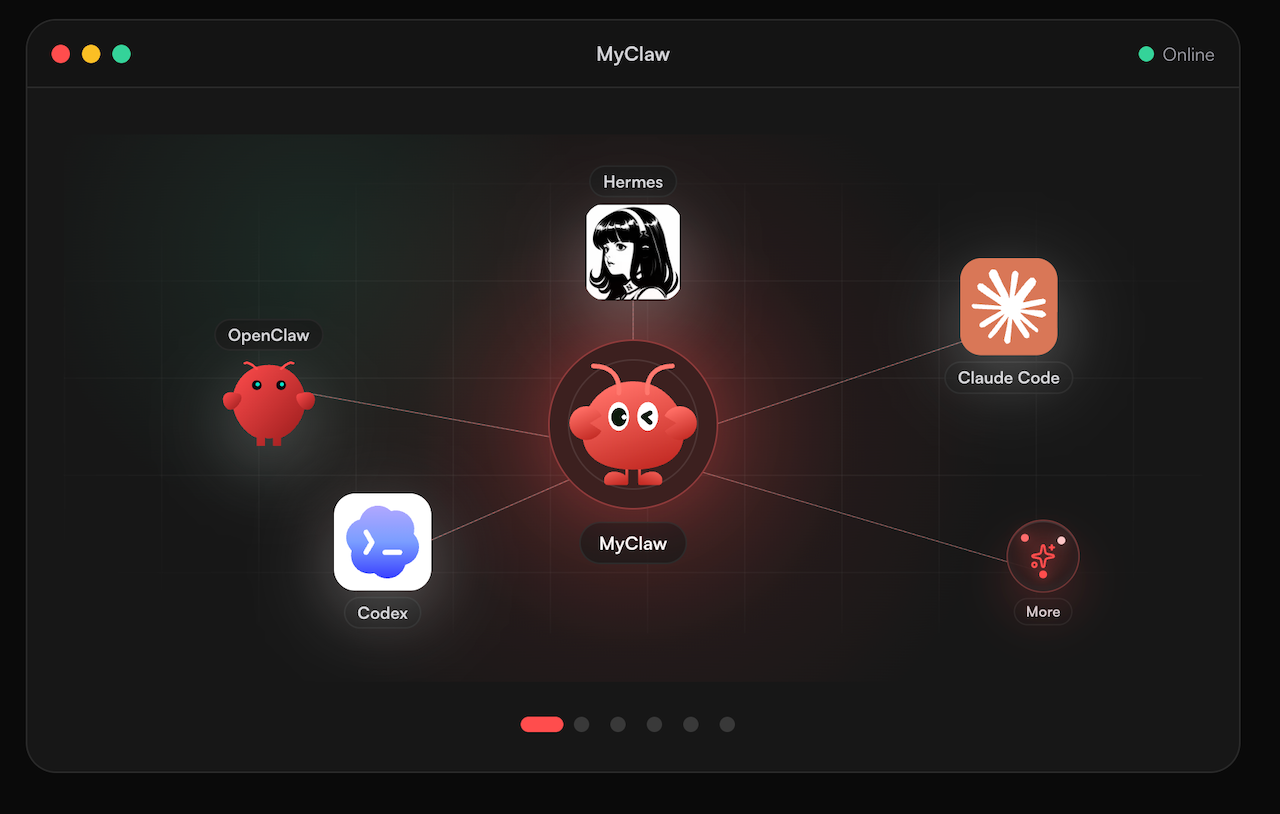
MyClaw is managed OpenClaw/Hermes agent hosting: always on, scheduled jobs, no server for you to babysit. It works with most popular models. A frontline manager can park an overnight pipeline hygiene run that lists opportunities stuck in the same stage too long or missing a next meeting, then drops the list in chat before standup. A director running several pods can schedule a weekend CRM cleanup—duplicates, blank required fields, owner and territory mismatches—and a Monday morning forecast digest that reconciles commit versus pipeline so the regional call starts from one view. Use models and CRM skills you are already authorized to use.
- Create a MyClaw workspace and connect the models and skills you are already authorized to use.
- Define the recurring work—pipeline hygiene, forecast digests, CRM cleanup—and attach schedules so the agent keeps running after you close the laptop.
- Review logs and tighten prompts or tools as the jobs stabilize; change models only when you are ready to re-validate the same checks.
Hygiene can still run at 3 a.m. while you decide whether the next hire is another AE or another manager who will have time to coach.
Conclusion
Sales team management tips come down to clear expectations, a cadence you keep, and one coached behavior checked on the next call. Tips to manage a successful sales team add protected 1:1s, named winning behaviors, and evidence-based forecast questions. How to manage large sales teams—tips and strategies included—adds span math, shared playbooks, pods when minutes run out, and automation that gives the calendar back to coaching. Cite HubSpot 2025, Salesforce’s 6th edition (2024 survey window), and Alexander Group’s FLSM figures with their dates. Put always-on pipeline, forecast, and CRM checks on MyClaw with OpenClaw/Hermes so the admin still runs while the org chart catches up.
Skip the Setup, Run Best-in-Class AI Agents Now
Launch a managed OpenClaw or Hermes Agent workspace in minutes, with always-on hosting, updates, and support handled by MyClaw.