Sonnet 5.5 vs Opus 4.6: Price, Benchmarks & When to Switch (2026)

By Olivia Hart
MyClaw Editorial
MyClaw
Run Best-in-Class AI Agents Now
Run OpenClaw or Hermes Agent on managed MyClaw hosting, so your AI agent stays online, updated, and ready for real work.
AI Takeaway
- Should you switch from Opus 4.6 to Sonnet 5.5? Yes for most coding and agent work: Sonnet 5.5 is newer, cheaper per job and stronger on shared coding tests, so reserve Opus 4.6 for jobs where your own tests put it ahead.
- What does each model cost? Per Anthropic's pricing on October 12, 2026, a million tokens of Sonnet 5.5 cost $2 to send and $10 to receive, while Opus 4.6 charges $5 and $25; Sonnet's newer tokenizer counts about 30% more tokens for the same text, so the real saving is closer to half.
- Is Opus 4.6 being retired? Not yet, because
claude-opus-4-6remains active on Anthropic's deprecation page, which sets its earliest retirement at February 5, 2027, so you have time for a planned migration rather than a rushed swap. - Which is better at coding? Sonnet 5.5 on the evidence available, though each launch post used a different test suite, so the fairest comparisons come from third-party boards and from trying both against your own codebase.
- Can I test the pair on MyClaw? Yes, both
claude-sonnet-5-5andclaude-opus-4-6are available there, so one task can go to each model from your chat app for a direct comparison.
Sonnet 5.5 and Opus 4.6 Spec Sheet
| Sonnet 5.5 | Opus 4.6 | |
|---|---|---|
| Released | September 28, 2026 | February 5, 2026 |
| API model ID | claude-sonnet-5-5; Bedrock adds an anthropic. prefix | claude-opus-4-6 |
| Position at launch | Mid-tier of the 5.5 family | Top model of its day |
| Price per million input / output tokens (Anthropic, Oct 12, 2026) | $2 / $10 | $5 / $25 |
| Cache reads, per 1M tokens | $0.10 | $0.50 |
| Context window | 1M tokens | 1M tokens |
| Standard output limit | 128K tokens | 128K tokens |
| Batch rates, per million tokens in / out | $1 / $5 | $2.50 / $12.50 |
| Earliest retirement (Anthropic platforms) | September 28, 2027 | February 5, 2027 |
| Output speed (BenchLeader, third-party) | About 141 tokens per second | About 40 tokens per second |
The rows that match tell you less than the ones that don't. Context and output ceilings are identical, so neither model unlocks bigger jobs. Price, age and speed all point the same way. The newer model gets a deeper look in our Sonnet 5.5 review.
Eight Months Apart: What Changed Between Opus 4.6 and Sonnet 5.5
Opus 4.6 launched in early February as Anthropic's flagship. Four more Opus versions have shipped since, ending with Opus 5.5, while Sonnet 5.5 joined in late September as the 5.5 family's second model. In model terms, that's a long gap.
A mid-tier model now competes with this year's former flagship. Anthropic claims Sonnet 5.5 beats Sonnet 5 on speed by over 30% while trimming typical per-task spend by as much as 30%. If your stack still pins claude-opus-4-6, you are paying flagship rates for a model several generations behind. Our look at how Opus 5 improved on 4.6 shows how far the Opus line itself has moved.
Coding and Agent Benchmarks, Read With Care
Neither launch post tested the other model, and the suites differ, so none of the vendor figures below form a head-to-head result.
Vendor-reported, different tests:
- Sonnet 5.5 (Anthropic): 81.3% on SWE-bench Pro at max effort, 70.6% on Terminal-Bench 4.0 and 90.3% on SWE-bench Multilingual.
- Opus 4.6 (Anthropic): 80.8 on SWE-bench Verified, 65.4 on Terminal-Bench 2.0, 72.7 on OSWorld, 68.8 on ARC-AGI-2 and 84.0 on BrowseComp.
SWE-bench Pro is a harder set than SWE-bench Verified, and Terminal-Bench 4.0 is not the 2.0 release, so lining these numbers up side by side would mislead.
Third-party results on shared tests:
- Vals AI's Vibe Code Bench: Sonnet 5.5 at 92.4%, Opus 4.6 at 57.6%.
- BenchLeader's GPQA Diamond: Sonnet 5.5 at 95.6%, Opus 4.6 at 90.5%.
- BenchLeader's Terminal-Bench run: Opus 4.6 ahead, 79.8% to 61.8%.
BenchLM notes the pair share only three sourced benchmark rows, too few for a broad winner. The pattern still leans toward Sonnet 5.5 for building software, with Opus 4.6 holding its own in terminal-heavy work. We applied the same caution when pitting Gemini 4 against Opus 4.6.
Jobs Where Opus 4.6 Can Still Win
Age alone doesn't make a model the wrong pick. Opus 4.6 still makes sense in a few situations:
- Prompts tuned over months. If a pipeline has been calibrated around Opus 4.6's habits, a new model can break formatting or tone in subtle ways, and re-validating costs time.
- Terminal-heavy agents. The one third-party terminal benchmark above favors Opus 4.6, so command-line automation deserves a direct test before you switch.
- Long-document retrieval. Anthropic reported a 76% score for Opus 4.6 when retrieving facts across a million-token MRCR v2 prompt, which made it a strong pick for pulling facts from very large inputs.
- Regulated workflows. Teams that certified one model for compliance may prefer to keep it until the retirement notice arrives.
Elsewhere, staying is mostly inertia.
Price Per Million Tokens and Per Finished Task
Per million tokens, Sonnet 5.5 lists 60% below Opus 4.6 on both input and output. One catch from Anthropic's pricing page: Claude 4.7 and later models use a newer tokenizer that produces roughly 30% more tokens for the same text, and Opus 4.6 still uses the older one. On an identical prompt, that trims the saving to about half. Caching widens the gap again: cache hits on Sonnet 5.5 cost $0.10 per million, a fifth of Opus 4.6's $0.50, and Sonnet 5.5 accepts prompts as short as 512 tokens for caching. Batch jobs halve both models' rates.
Effort settings and how many tokens a model burns to finish a job decide the rest, and a faster model also shortens wall-clock time for agents that wait on each step. The practical test is simple: run twenty representative tasks on each, log total tokens and success rate, and divide cost by finished tasks. If even Sonnet feels like more model than the work needs, our guide to choosing between Haiku 5.5 and Sonnet 5.5 covers the cheaper tier.
Migrating Off Opus 4.6 Before Its Retirement Window
Anthropic lists February 5, 2027 as the earliest date it will retire Opus 4.6 on Anthropic-run platforms, and promises at least 60 days' notice to active customers. Partner clouds such as Amazon Bedrock and Google Cloud publish separate schedules, so check yours.
A calm migration looks like this:
- Swap the model ID in a staging environment and keep Opus 4.6 as a fallback route.
- Check thinking settings. Anthropic says teams running Sonnet with thinking off must switch to the new
between_toolssetting before moving to Sonnet 5.5. - Drop sampling overrides. On Claude 4.7 and later models, custom sampling values (
temperature,top_p,top_k) now trigger an error, so remove those overrides. - Re-run your evals on real tasks, not benchmarks, and compare cost per finished job.
- Cut over gradually, routing a growing share of traffic to Sonnet 5.5 as results hold.
If you'd rather weigh a newer Opus than drop to the Sonnet tier, our piece on Sonnet 5.5 against the newer Opus 4.8 covers that decision without repeating it here.
Sonnet 5.5 vs Opus 4.6 Verdict: Switch Most Work, Test the Rest
Sonnet 5.5 Pros:
- 60% lower list price, with far cheaper cache hits
- Stronger coding results on shared third-party tests
- Much faster output in independent measurements
- Supported until at least September 2027
Sonnet 5.5 Cons:
- Prompts tuned for Opus may need rework
- Trails Opus 4.6 on one third-party terminal benchmark
Opus 4.6 Pros:
- Known behavior in long-running, tuned pipelines
- Strong long-context retrieval results from Anthropic
Opus 4.6 Cons:
- Flagship pricing for an older model
- Retirement window opens February 2027
- Slower output
The call: start new projects on Sonnet 5.5, move existing Opus 4.6 workloads after an A/B test well before February 2027, and send the hardest long-horizon tasks to a current Opus instead of staying on 4.6.
Put Sonnet 5.5 and Opus 4.6 Through the Same Task on MyClaw
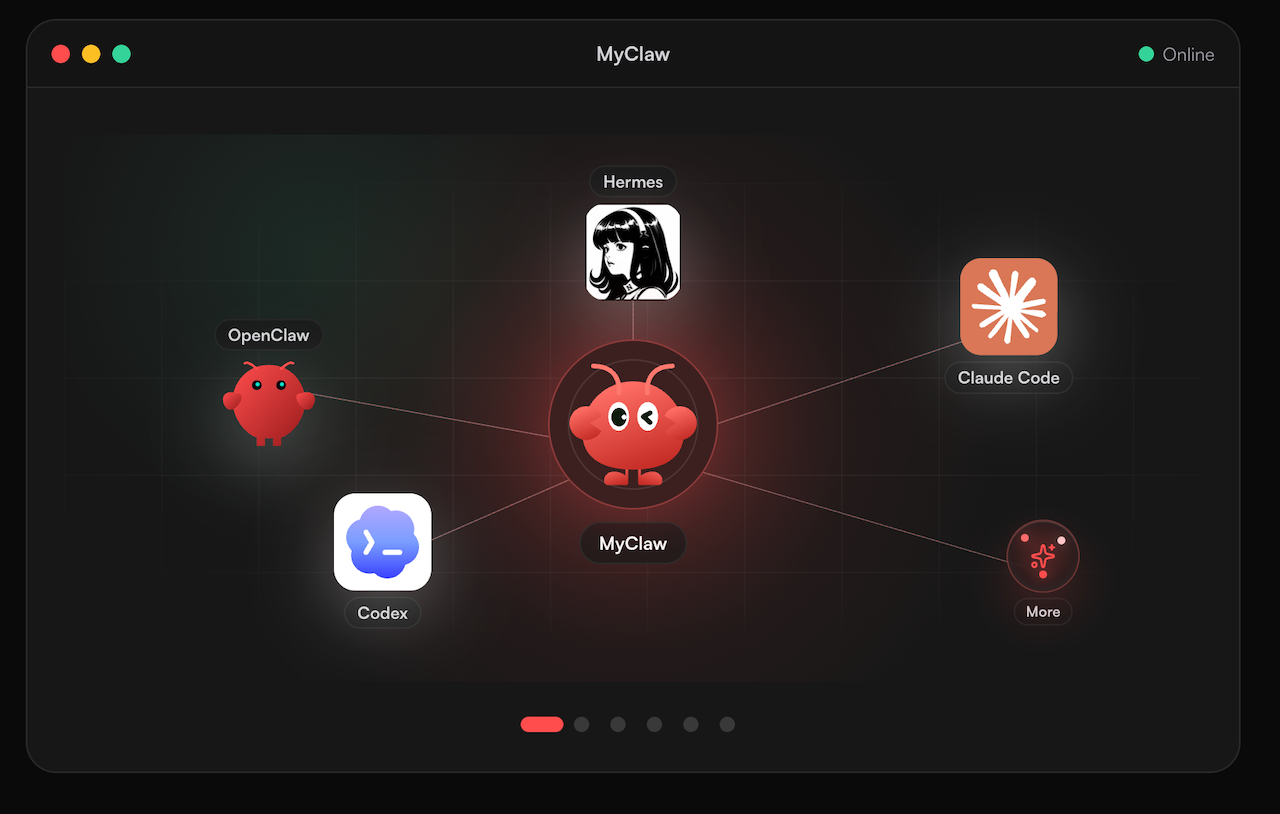
Benchmarks and price tables can't decide it for you; the real answer comes from your own work. MyClaw keeps a hosted agent online, running OpenClaw or Hermes Agent, and that agent can call either model, so a head-to-head trial happens inside a live agent, without you managing API keys or servers. For broader advice on pairing models with agent jobs, read our roundup of the top models for OpenClaw.
- Start a MyClaw agent and connect your chat app.
- Give one real task to Sonnet 5.5, then rerun it on Opus 4.6 with identical tools and inputs.
- Compare output quality, time and token use, then set the winner as default with the runner-up on standby.
Skip the Setup, Run Best-in-Class AI Agents Now
Launch a managed OpenClaw or Hermes Agent workspace in minutes, with always-on hosting, updates, and support handled by MyClaw.